Right now, we’re not taking on service or repair work for systems that weren’t installed by our team.
Keeping Your Heat Pump Happy
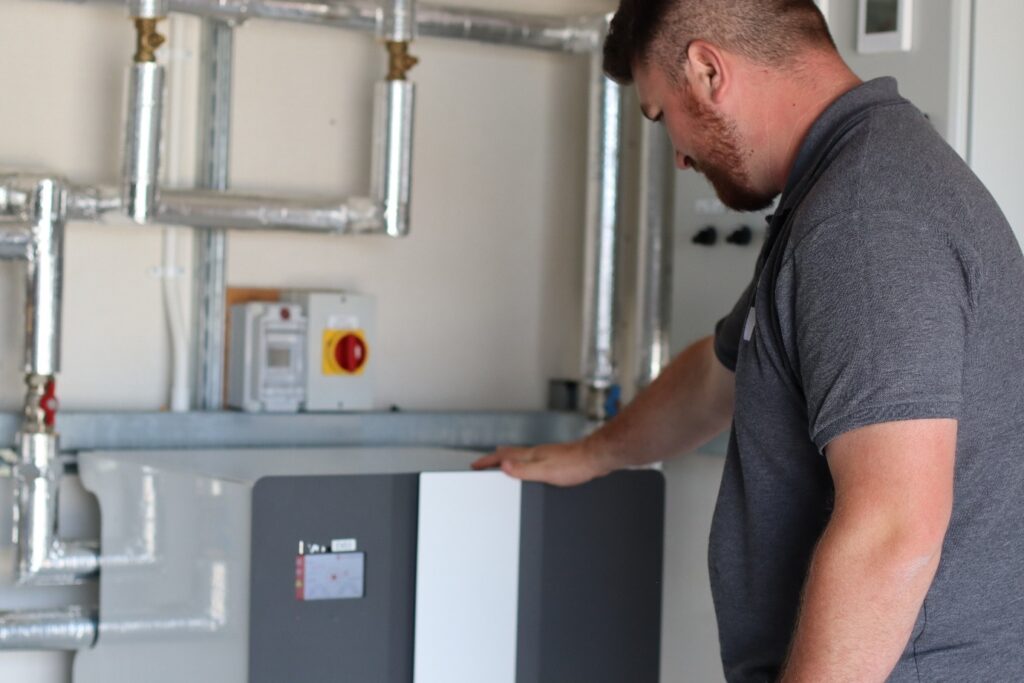
To keep your heat pump running smoothly — and to stay within your manufacturer’s warranty — it’s important to have it serviced once a year.
From 2026, we will carry out annual services between April and September, so everything’s in top condition when the colder weather kicks in.
What’s Included in Your Service
When you book your annual service with us, we don’t just give your heat pump a quick once-over. We also check your ground loop collector (for Ground Source Heat Pumps) and, if we installed them, your heating and hot water systems too. It’s a complete health check for your home’s comfort system!
Friendly Faces, Expert Care
Your service will be planned ahead of time and carried out by our skilled, friendly engineers who really know their stuff. We’ll make sure your system is running safely, efficiently, and ready to keep you warm all winter long.
Roseland Plumbing & Heat Pumps provides a comprehensive range of services, including:
Why choose underfloor heating?
Lower Running Costs
Underfloor heating operates at lower water temperatures than radiators making it more energy efficient and therefore, saving you money.
Higher Comfort Levels
Underfloor heating distributes warmth evenly across the whole room, preventing the cold spots that often arise with traditional radiator systems. Radiators tend to heat just the area immediately around them, which can leave corners, spaces near windows, or by doors noticeably cooler. Not to mention, it feels very cosy underfoot in the cold, winter months.
Increased Control
Each area equipped with underfloor heating is provided with its own dedicated thermostat, enabling independent temperature regulation for each system. For example, you can reduce the temperature in seldom-used bedrooms or spare rooms while keeping living spaces comfortably warm, thereby lowering energy usage where it is not needed. This approach offers enhanced control over energy consumption and supports improved energy efficiency, as it prevents unnecessary heating of unused areas and allows for precise adjustments to suit individual preferences. Over time, this setup can lead to significant cost savings, as homeowners only heat the spaces they are actually using, making the system both economical and environmentally friendly.
Better Aesthetics
Underfloor heating does not take up any additional space in the room, unlike traditional radiators which can occupy valuable wall space.
Labour Saving
Underfloor heating ensures that wet floors dry very quickly, which makes cleaning easier and offers distinct advantages. For example, in kitchens and bathrooms where spills and splashes are frequent, rapid drying helps reduce the risk of slips and supports better hygiene. In homes, this provides comfort and convenience for families, making daily maintenance simpler and safer
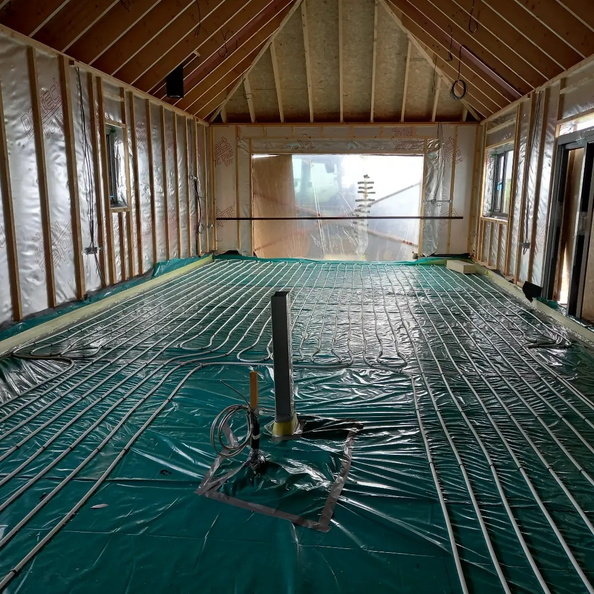
The main difference between an underfloor heating system and a radiator system lies in the flow temperature of the water in your central heating system. Flow temperature refers to the temperature of the water circulating through your heating pipes, which directly affects how much heat is delivered to each room. Underfloor heating typically operates at lower flow temperatures, whereas radiators generally require higher temperatures to provide adequate warmth.
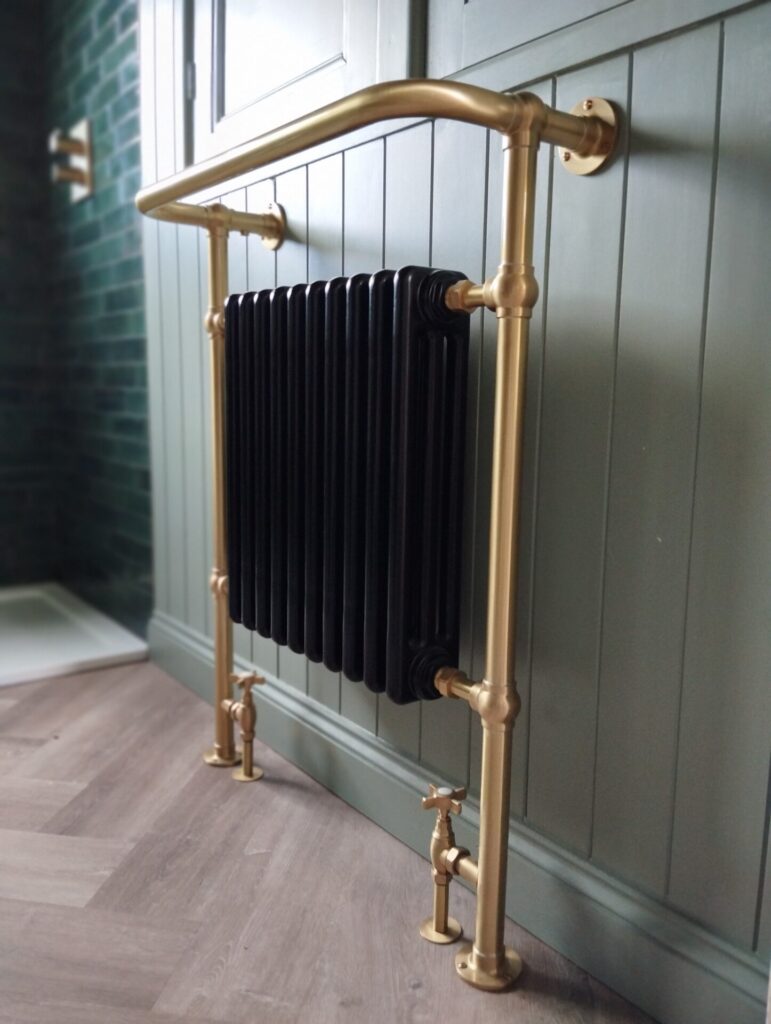
It is possible to run radiators at lower flow temperatures, but this often means you’ll need to use larger or higher output radiators. “Radiator output” simply describes how much heat a radiator can emit into a room, and this is measured in units such as watts or British Thermal Units (BTUs). The output depends on both the size and design of the radiator, as well as the temperature of the water flowing through it.
For example, if you wish to operate your radiators at a lower flow temperature of 45°C instead of the more common 65°C, you may need to install larger radiators or opt for more efficient models to maintain the same level of warmth in your rooms. As part of any heat pump system design, it’s important to check the radiator outputs at the proposed flow temperature and specify the correct radiator or radiators for each room, ensuring comfortable and efficient heating throughout your home. Our team will be able to advise you about the best heating system for your property.
Running a heat pump system at lower flow temperatures of 45°C will improve the overall efficiency of the system. However, it is likely that most, if not all, of the existing radiators will need to be replaced with larger, modern radiators.
.